Kerygma

Advent and Christmas always provide a full and eventful kick-off to the liturgical year. This year we celebrate a Jubilee. Specifically, we celebrate the 2,025th anniversary of the Incarnation of our Lord. It seems like the perfect time for a fresh start. What better time, then, to once again reactivate this humble blog?

If you are new to Theological terms, then the title of this post might seem strange to you. “Kerygma” is a Greek word meaning proclamation. Specifically, it is the Greek word used in the New Testament to describe the apostolic proclamation of the good news of Christ and our salvation. Jesus directed the Apostles to go into the world and preach the good news to every creature (Mark 16:15, Luke 14:23). As the Apostles are called, so we are called. But what exactly is this good news, and what does it mean for us in our modern daily lives? There are many online resources that dive deeply into the Kerygma, the Kerygmatic Message, and the kerygmatic approach to teaching religion at all levels. I invite you to search the term in your favorite search tool to fully explore this topic. Acts chapter 2 is also a good place to gain a firm scriptural understanding of the subject.

I’d like to focus on the four core points of the Kerygma, because I find that they provide a solid anchor for my personal prayer life and they weave through and link together most of the concepts I cover in my catechetical efforts with both youth and adults. They are

–God Loves you and has a plan for your life.
–Sin interferes with this plan.
–God sent Christ to conquer sin.
–Reconnecting your life with Christ opens the path to Salvation.

Each of these points raises interesting and difficult questions. Who or what is God? How can I see or feel that he loves me? What about emotional distress or financial hardship; is that God’s plan for me? If sin blocks the plan, does that mean that God doesn’t love me when I’ve sinned? If Christ conquered sin, why is it so prevalent in my life? Why do I continue to fall into sin? Why does the sin of others hurt me and those that I love? That doesn’t seem like good news at all! Finally, if the remedy is a reconnection with and through Christ, what can I do to find and maintain this reconnection? I can’t answer all those questions in a single blog post. In fact, right now I’m at the beginning of a 10 week class that I’m offering at my home parish. 10 weeks isn’t enough to fully answer these questions either. My goal is to put people on a path to their own spiritual journeys to uncover a way forward; a way to embrace to the fullest extent possible the good news of the proclamation and be prepared for the glory of the ultimate realization of these truths when we are one day face-to-face with God our creator. St. Augustine teaches us that God gives us faith in this temporal world as a solace to life’s strife, hardship, and misery. In the next life and in the world to come, we won’t need faith, because we will be with God. We will see truth and ultimate peace. We will exist in truth and ultimate peace (City of God, book xix).

We sin, because God gave us free will. He gave us free will, because without it we would worship him out of meaningless robotic obedience, not love. God wants our love. Why? Because he loves us. The plan He has for each us is designed to lead us back to Him. Sin, though, throws up a wall between us and God. Sin separates us from Him in all three persons of the Trinity. The road back to God leads to the foot of the cross. “For God so loved the world that he gave his only Son, so that everyone who believes in him might not perish but might have eternal life.” (John 3:16). This only son, God Himself in human form, God’s very word made flesh to dwell amongst us, loves us, teaches us, died for us. Christ’s love for us “surpasses knowledge” (Ephesians 3:19). How then do we reconnect? God did not leave us alone in the wilderness with regard to that struggle either. During his ministry on earth, Christ instituted for us the Sacraments through which we can abide in hope, faith, and love. When he returned to God, Christ sent us the Holy Spirit to continue to guide us (John 16:7). The Holy Spirit bolsters us and gives us peace in this world. We must, though, manage our free will such that we stay connected to the Holy Spirit. The Holy Spirit is always there, and He too, always loves us. We can walk away from God, but God–Father, Son, and Holy Spirit–never walks away from us. This pure love from God we call Grace. We can reject it, but we did not, and cannot earn it. Neither can we achieve it. We are not capable of loving God the same way he loves us. The closest we can come is to answer the call contained in God’s plan for us. We can turn our will and our lives over to God, love him to the fullest extent of our being, love our fellow creatures as we love ourselves, and……

Proclaim the Good News!

That, dear bothers and sisters, is the Kerygma.

The Journey of Lent

I’ve been away…. again.

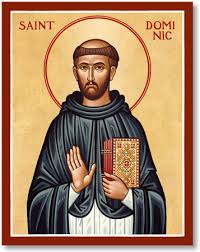
I’ve been away on a journey. Along the way, I found myself in some interesting places, ran into some obstacles that I had to overcome, and was forced to face some dark and scary places. It provided lessons, this journey of mine, and provided opportunities for growth. The foremost lesson I came away with was the somewhat stark realization that this journey is not going to end. I have merely come to a clearing in the forest through which my path leads. In this clearing, I’m ready to begin sharing my thoughts with you again via this humble blip in the vast electronic universe we call cyberspace. The thing is I didn’t really go to, or through, a physical place. This was a journey to the deepest part of my inner self. Departing was not an option. For one thing, I entered the period where I had to determine whether to move from my Novitiate in the Order of St. Dominic to taking the next step and making my Temporary Profession, a promise to do the best I could to live in accordance with the rule of the Order for a period of three years. Becoming a Lay Dominican is not like joining a service club or a book discussion group. It’s a Vocation. It’s not a decision. It’s a discernment. I could probably write an entire separate blog post on that distinction and perhaps someday I will but suffice to say at this point it is an issue which requires the full attention of one’s Spiritual faculties. Neither is it something one hashes out in publicly posted thoughts. This wasn’t going on in a vacuum either—those obstacles and dark places I’ve already mentioned—so I had much to sort out. The blog fell off my radar screen. Now, we’ve arrived at the end of the first full week of an early Lenten season. This seems like as good as time as any to screw my discipline to the sticking plate and return to the keyboard. Will you all pray for me that I might find the wherewithal to post more frequently? I’ve gone back and looked at some of my earlier posts. I like some of them very much. Others are, well, meh. Back at it then! To review, since it’s been awhile, this blog is called Vehicle Vespers: Reflections of a Catholic Dad, because my Dad duties often require me to pray Vespers while on the run. The usual form being praying in the minivan while sitting in a parking lot before going into a game or picking someone up from work or a practice. I’m not sure that this prayer location has any direct relationship to the topics I decide to write about here, but a blog needs a title, does it not? Lent is our first topic, and I think it might be interesting to stick with the journey theme.

Most often we see Lent as a period of preparation. That is certainly a proper view. There is, though, a certain sense one gets of moving through Lent. We structure our preparation around the three chief undertakings of Lent: Prayer, Penance, and Charity (or almsgiving). I think a valid argument can be made that if we adequately engage in these three activities, we should hope that by the time Easter arrives we have achieved some level of Spiritual growth. It’s not unlike the strength training an athlete does to prepare for an upcoming season. The goal is strength and agility, but the means to that end is the time spent in the gym. It is ultimately a matter of assessing where we are and where we want to be. It is something we are called to go through. I, like many other Catholics, find the Stations of the Cross particularly meaningful and moving during Lent. Can we really walk along with Christ as he carries his Cross? Can we feel what we would have felt if we were there with those who loved him most as they witnessed that scene? We certainly strive to receive such a perspective from the Holy Spirit as we gather as a parish or community to share this wonderfully kinetic form of prayer. All the sights and sounds of Lent seem to have a very linear motion. Lent is not a bubble either. It is very much locked in with the full liturgical calendar of the Church. We begin the year in Advent, preparing ourselves for the wonderous arrival of the Christ child at the Nativity. Each week as another Advent candle is lighted, the anticipation grows, and then the peace, warmth, and well-being of Christmas Eve is upon us, and the bright light of hope rises with the Christmas morning sun. In our human weakness, though, peace on earth to people of good will cakes and falls off as we pass into the new year (Lk 2:14). It’s back to work and school. New tasks and responsibilities take hold. That proverbial grindstone spins roughly on our noses. The crush of secular reality asserts itself, and it does so right about the time that the days are the shortest, the nights darkest, and the climate coldest. Even at Mass and in our prayer books we find ourselves dutifully marking Ordinary time. The term is based on the ordinal nature of that part of the calendar, but the double entendre of the nomenclature, at least in English, is not lost on us. The Sacraments of course never lose their power and majesty. For my part, I don’t know sometimes how I would muddle through without them. And too, it is not a good witness to Christian charity or a good reflection of our Faith to fall into despair, even in the darkest of Winters. The truth is, however, that “the Spirit is willing, but the flesh is weak” (Mt 26:41). Tired of Spirit and worn out a bit from the weakness of our flesh. That is where we often find ourselves when Ash Wednesday arrives. Enter then, Prayer, Penance, and Charity. We observe and practice these guideposts to Spiritual strength to prepare ourselves for Easter, and they are the road signs we follow to restoration. They are the wooded paths that intersect with the road to Emmaus (Lk 24:13-35).

Perhaps this is me stretching to find support for the point I’m trying to make, but the readings from this first week of Lent are not without a few journey references. Sunday’s Gospel reading (Mk 1:12-15) speaks of Christ’s journey into the desert for forty days. Monday’s responsorial Psalm was Psalm 23 with it’s “walk in the dark valley.” On Tuesday, the prophet Isaiah speaks of the Word going forth from the mouth of God and achieving the end for which it was sent (Is 55:10-11). Wednesday we heard once again about Jonah’s trip to Nineveh (Jon 3:1-10), and the Gospel reading refers to the Queen of the south who “came from the ends of the earth” (Lk 11:29-32). Thursday we are taken to the Book of Esther, a traveler who was away from the land of her birth. In Friday’s Gospel reading Christ teaches that we should “Settle with your opponent quickly while on the way to court” (Mt 5:20-26). Now I want to be very clear that I’m not stating in any way that the purpose or focus of the readings for the first week in Lent are intended to be lessons on journeys, Spiritual or otherwise. The proper exegesis of Mass readings is the role of the Priest. I think it is safe to say, however, that the readings are applicable to Lent. I’m just noting that image of journeys is present in some of these readings.

This coming Sunday will be the 2nd Sunday of Lent and thus we move a step closer to Easter. Penance is largely an individual matter, and Charity in the form of almsgiving requires anonymity. That leaves Prayer as the best Lenten topic for further consideration. I’m planning to pray often and think about prayer a great deal this Lent. If you are willing, perhaps you would consider being a companion for my journey. I’d like to start a series of posts about prayer and specific prayers, how through prayer we can bring ourselves closer to God and more fully experience the love of Christ in our lives, and how we can then love one another as Christ has loved us (Jn 13:34-35). Specifically, I’d like to take a deeper look at The Invitatory, The Benedictus, The Magnificat, The Canticle of Simeon, and the Mysteries of the Rosary. I know that not everyone who visits this blog is Catholic, and some may not even be Christians. I can only quote one of my favorite hymns and say, “All Are Welcome.” Here I seek only to share, as the name implies, reflections of this Catholic dad.

Be 10!

Before I get to my topic for this post, let me take care of a few housekeeping items. First, I’d like to acknowledge and apologize for the long gap between posts. The fact is that I’ve been working on some personal goals and self-examination. Writing about issues of faith and spirituality can be daunting at such times. I realize, intellectually at least, that if I offer these humble articles as gifts of love, and if I have faith, then I shouldn’t be afraid to share my thoughts with you, and I shouldn’t entertain thoughts of inadequacy of rhetoric, style, or tone. I was just looking at some stats and it appears that I drifted away at exactly the wrong time. I was blessed to receive 183 views of this site in the first week of February. That is probably a small number in the vast universe that is social media presence, but it’s a big deal to me. I hope a large percentage of that 183 will return when they see that there is finally some new content. More than that, I ask always for your prayers; if you are reading this, please consider keeping this blog and its author in your daily prayers. I shall, in return, pray earnestly for all of you. Second, I just want to let you know that, for now anyway, I’m not going to write about the current scandals facing the Church. I don’t pretend to be a religious journalist, and pretty much everyone from Rome to Madison Avenue to Jakarta has opined on what happened, what should happen, and what they think is going to happen. I don’t feel that I have anything cogent to offer on the subject. I will pray—hard—for the victims and I encourage you do to so as well.

Alright, then! I’m back and I hope you are as well. May the Grace and Peace of our Lord, Jesus Christ, which passes all understanding, be with you all. Now: today’s topic.

When one really steps back and takes a breath and a broad view of the relationship one has with Our Lord, it becomes clear that we humans are complicated, but Christ’s love for us is really very simple and direct. We were all created in God’s image, but we were not created to be co-divine. That might sound obvious, but it is an important point. We are imperfect beings that are nonetheless objects of perfect love. That is probably why we often refer to ourselves as “children of God,” and not “brothers and sisters to God.” We don’t always act that way, though. We kick around concepts of religion and theology like they are vast, complex, and very “grown-up” issues. The truth is that religion might get you a book deal, and theology might get you a teaching gig, but salvation is an outpouring of God’s Grace in the form of Christ’s love for all of us and his passion on the cross. We can wrestle with didactic arguments if it makes us feel important, but I think that we would be better served by making ourselves “10-years-old for Christ.”

One of the many blessings in my life are the group of my adopted nieces and nephews. Mostly, these are the children of very close friends who are now more like family. One of them is my adorable goddaughter who is still a toddler, another is a wife and mother of her own toddler now, and still another will be confirmed this year and has honored me by asking me to be her sponsor (a decision she might now regret, because if I’m your sponsor, I’m picking you up every Sunday morning to go with me to Mass). This morning I got to spend some time with yet another neat person who calls me “Uncle Paul.” Her mother had an early appointment, so I was tapped to be on hand to ensure that she got on the school bus safely. She was already up and moving when I arrived. She had her breakfast, washed her face and combed her hair, picked out her outfit and got dressed, checked over her homework, made sure she had all important books and papers in her backpack, took the dog out to do its business, secured said dog in its day-crate, retrieved her lunch, closed and locked up the house, and headed to the driveway to wait for the school bus. I must admit that I was wondering what the heck I was doing there. She certainly didn’t need my help for anything. I was, of course, security. I was an adult presence there in case of any unforeseen issue and so I could make sure that she got on the bus safely. She didn’t need me in any tangible way, but she could be comfortable in the fact that I was there; that I was watching over her. I reminded her that I work from home, so I am always nearby and asked her if she had my cell phone number in case of an emergency and she confirmed that she did. In the midst of the small talk while we were waiting for the bus, she paused and looked up at me and said in a discernibly serious tone, “Tomorrow, I’m going to be 10 years old.” I was struck with a real sense that she was in tune with the fact that she isn’t a baby anymore. She is a person with a strong sense of identity and self-awareness, but she also understands that she’s still a kid, and she needs the security and stability that the adults in her life provide.

It is a relatively non-eventful anecdote, but I share it with you because I think it provides a metaphor for the way God can act in our daily lives. If through prayer and other means, we tune ourselves into the security and stability of Grace, then we can go about our daily responsibilities efficiently and earnestly, because we have that sense that Christ is with us and God is always there. I want to be 10 again for Christ. I think Christ opens us to the freedom of being loved at that level. Sin is the unforeseen incident, and God is the adult in the room that, through Christ, removes the obstacles so we can get back to living normally and healthfully. I want to be 10 again for Christ. Take a second and think about your best friend in 5th grade. I’ll bet you are smiling. At 10, one’s personality is developed enough that deep and sincere relationships can bond and form, but one is still young enough that much of the flotsam and jetsam that creeps into our lives in our teen years hasn’t hit yet. I want to learn to love all the people in my life the way that my niece loves her dog, her best friend, her family, and unicorns. I want to feel the sense of safety and security she feels when her dad gets home, or when her Uncle Paul is there to make sure she gets on the bus okay. I want to be 10 again for Christ. I want to understand deeply that I am always welcome in the house of the Lord, and that I can be me, and that I don’t have to prove anything to Christ. This is the true power that Christ gifts to us through the cross. Not the power to conquer nations or build huge ministries or massive churches. We can do those things, and He can be our guide and our strength in all endeavors. But I want to be 10 again for Christ. I want to shake off the bothersome and nagging adult issues that try so hard to pull us away from our relationship with the Lord. I want to be 10 again for Christ, and I want to hear with a 10-year-old’s ears, and believe with a 10-year-old’s faith, and love with a 10-year-old’s heart when I hear Christ Jesus say, “Remember that I will be with you always; even unto the end of the age.” I pray that all of you will reconnect with your own inner 10-year-old as well. It’s good to be back on the blog. Thanks for reading my humble musings. Believe that you are special and worthy of love because God made you who you are, and Christ loves you very much, and may God bless us, protect us from all evil, and bring us to everlasting life.